
The Seedsun selection
Vitis rotundifolia ‘Triumph'
SKU: VITI-ROTU-TRIU-01G
The muscadine is the South's own grape, and 'Triumph' is one of the finest for the home garden. Vitis rotundifolia is a vigorous native vine of the southeastern United States, the first North American grape brought into cultivation, long grown for thick-skinned, intensely flavored fruit and the.
Ask for a tailored quote
Pricing, pack sizes and availability are confirmed in your personal quotation. Sending an enquiry does not place a paid order.
Ask about suitability, sowing and growing requirements.
Confirm delivery options and required documents in your quote.
About this variety
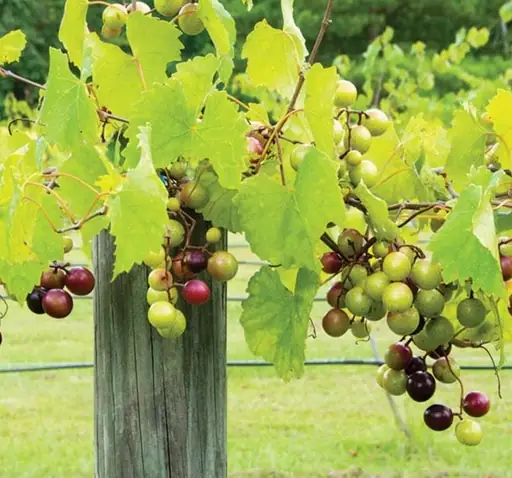
The muscadine is the South's own grape, and 'Triumph' is one of the finest for the home garden. Vitis rotundifolia is a vigorous native vine of the southeastern United States, the first North American grape brought into cultivation, long grown for thick-skinned, intensely flavored fruit and the honeyed wines of Scuppernong fame. 'Triumph', a bronze-fruited selection, carries that heritage forward with unusual quality and ease.
The berries of 'Triumph' are large, sweet, and bronze-green, thick-skinned in the muscadine way, with a rich, musky flavor prized for fresh eating, juice, jelly, and wine. The vine is vigorous and notably resistant to the mildew and rot that trouble bunch grapes, and, unlike many older muscadines that carry only female flowers, 'Triumph' is self-fertile, so a single vine sets a full crop, with even heavier yields where a second muscadine grows nearby.
Broad, rounded, glossy leaves with toothed edges clothe the sprawling vine and turn soft gold in fall. Small greenish-white flowers open in late spring, quiet but fragrant and worked by bees, and the fruit ripens over a long window from late summer into early autumn, feeding people and wildlife alike.
Give 'Triumph' a sturdy arbor, a trellis, or a strong fence in full sun, and room for a vigorous climber to run. The vine thrives across the warm South in well-drained soil, asks little once established, and rewards a hard annual pruning with a heavy crop. A handsome, productive backbone for an edible landscape, and a living piece of Southern agricultural history.
More to discover

Questions & discussion