
The Seedsun selection
Soapwort Flower seeds for Garden Planting
SKU: 95336
Discovering Soapwort: Nature's Gentle Cleanser Soapwort is a charming perennial plant with a fascinating history and practical applications that have made it valued for centuries. Known scientifically as Saponaria officinalis, this herbaceous plant gets its common name from the natural saponins.
Ask for a tailored quote
Pricing, pack sizes and availability are confirmed in your personal quotation. Sending an enquiry does not place a paid order.
Ask about suitability, sowing and growing requirements.
Confirm delivery options and required documents in your quote.
About this variety
Discovering Soapwort: Nature's Gentle Cleanser
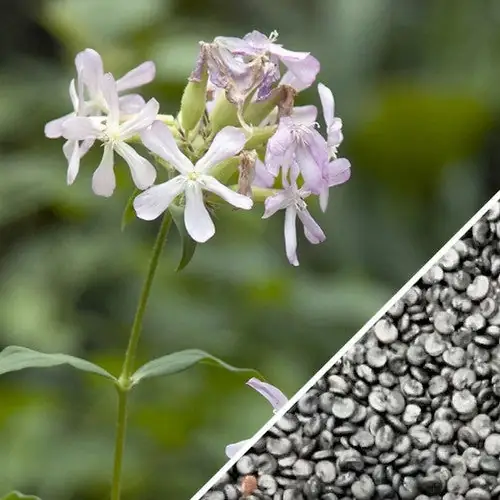
Soapwort is a charming perennial plant with a fascinating history and practical applications that have made it valued for centuries. Known scientifically as Saponaria officinalis, this herbaceous plant gets its common name from the natural saponins found in its roots and leaves—compounds that create a soap-like lather when mixed with water.
Appearance and Growing Habits
Soapwort produces delicate, five-petaled flowers that typically bloom in shades of pink, white, or pale rose from mid-summer through early fall. The flowers grow in dense clusters at the top of sturdy stems, creating an attractive display that adds soft color to garden borders and cottage-style plantings. The plant grows to about two feet tall and spreads readily, making it an excellent choice for filling garden spaces and creating natural drifts of color.
The foliage is simple and attractive, with oval-shaped leaves that remain green throughout the growing season, providing visual interest even before the flowers appear.
Easy Care and Low Maintenance
Soapwort is remarkably forgiving and thrives in a wide range of growing conditions. It prefers full sun to partial shade and adapts well to various soil types, though it performs best in well-draining soil. Once established, soapwort is drought-tolerant and requires minimal watering, making it an ideal choice for low-maintenance gardens and water-conscious landscapes.
The plant is also pest and disease-resistant, allowing you to enjoy beautiful blooms without the need for chemical treatments or constant monitoring.
Historical and Practical Uses
Beyond its ornamental appeal, soapwort has been used traditionally for cleaning delicate fabrics and as a gentle natural cleanser. The saponins in the plant create a mild lather suitable for washing without harsh chemicals, making it a natural choice for those interested in traditional or eco-friendly cleaning methods.
Whether you're drawn to soapwort for its pretty flowers, its historical significance, or its practical applications, this versatile plant deserves a place in any garden.
In Summary
Soapwort (Saponaria officinalis) is a beautiful, robust perennial in the carnation family with dark green lance-shaped leaves and light pink star-shaped flowers that have a pleasant floral clove scent. Can grow 1'-2' tall and 12"-18" wide, and prefers cooler weather. The entire plant contains saponins, with the highest concentration in the roots, which make a gentle foamy lather when mixed with warm water, and is used as detergent or soap to clean skin, hair, and delicate fabrics. Also called Bouncing Bet, a historical expression for a laundry woman. Reseeding and runner roots enable it to spread easily and it can become invasive.
As a medicinal plant, Soapwort has been used internally to treat bronchitis, colds, cough, diarrhea, kidney stones, and respiratory problems, and externally to treat acne, boils, burns, eczema, inflammation, itchy skin, muscle pain, poison ivy, psoriasis, rash, and wounds.
⚠️ Toxic to people, pets, and livestock if ingested in large quantities. Toxic to fish, so do not grow near waterways. Do not ingest while pregnant or nursing.
⚠️ Medicinal properties are presented as information only, and are not a recommendation or prescription for use. Consult a medical professional before using any plant medicinally.
- Life cycle: Herbaceous perennial
- Bloom season: Summer
- Attracts: Hummingbirds, bees, butterflies, and other pollinators
- Flower meaning: Innocence, pure love
SEED PLANTING TIPS
- Botanical name: Saponaria officinalis
- Hardiness zones: 3-9
- Planting season: Spring, fall
- Days to maturity: 85 days-2 years
- Cold stratify: Yes
- Depth to plant seeds: Lightly cover - seeds need light to germinate
- Days to germinate (sprout): 7-28 days
- Germination soil temps: 60F-70F
- Spacing between plants: 12"-18" apart
- Soil types: Clay, sandy, loamy, silty, rocky, chalky, poor, average, moist, well-drained
- Soil pH: 6.6-7.8
- Water needs: Average
- Sun needs: Full sun, part shade
- Frost tolerant: Yes
- Drought tolerant: Yes
- Deer resistant: Yes
More to discover
The Seedsun selection
White radish short-leaf thirteen (for pesticide application) Seeds for garden planting
Ask for a tailored quote
The Seedsun selection
Green beans, golden mountain white beans (for medicinal purposes) Seeds for garden planting
Ask for a tailored quote
Questions & discussion