
The Seedsun selection
Rhodoleia henryi
SKU: RHOD-HENR-01G
The lesser-known of the two Hong Kong roses in the collection, Rhodoleia henryi is a handsome evergreen shrub or small tree from southern China and Taiwan, still little grown in the United States and, like much of the genus, occasionally muddled in the naming. Set beside the sister species.
Ask for a tailored quote
Pricing, pack sizes and availability are confirmed in your personal quotation. Sending an enquiry does not place a paid order.
Ask about suitability, sowing and growing requirements.
Confirm delivery options and required documents in your quote.
About this variety
The lesser-known of the two Hong Kong roses in the collection, Rhodoleia henryi is a handsome evergreen shrub or small tree from southern China and Taiwan, still little grown in the United States and, like much of the genus, occasionally muddled in the naming. Set beside the sister species Rhodoleia championii, this plant carries narrower, more pointed leaves, and the species is reckoned the more cold hardy of the two, a useful distinction for gardeners testing the edge of the range.
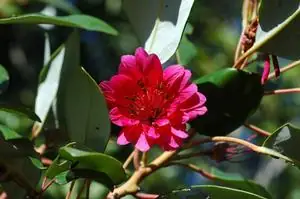
Both Rhodoleias belong to the witch-hazel family, the Hamamelidaceae, and both open showy pink to red flowers over lovely glossy foliage. On henryi the bloom arrives in late winter and early spring, when little else stirs, in pendulous, tassel-like clusters of long, narrow crimson to deep magenta petals that dangle from the branches like small fireworks or feather dusters. The flowers are lightly fragrant and a genuine treat for the earliest pollinators, and the winter timing makes the plant a quiet piece of drama in a season starved for color.
Out of bloom the foliage carries the plant: deep green, leathery, neatly oblong leaves with a soft silvery underside that catches the light, and bronzy-red new growth that adds color even without flowers. Our stock of Rhodoleia henryi was shared with by Sean Hogan, the plantsman behind Cistus Nursery in Portland, Oregon, and a fine mature specimen grows at Hopelands Gardens here in Aiken, South Carolina, proof that the plant performs in the Southeastern garden.
Grow henryi as a slow, dense, upright evergreen for a sheltered woodland setting, a shaded border, or a courtyard where the winter bloom and the sculptural foliage can be enjoyed at close range. Give good, well-drained, acidic soil and a spot shaded from hot afternoon sun, and shelter young plants from hard freezes while they settle in. Pair with camellias, tea olive, and other broadleaf evergreens that share the taste for cool, acid ground, and site the plant where a winter walk will pass the flowers. A connoisseur's evergreen, rare in cultivation and rewarding to the patient.
More to discover
Questions & discussion