
 Selected
The Seedsun selection
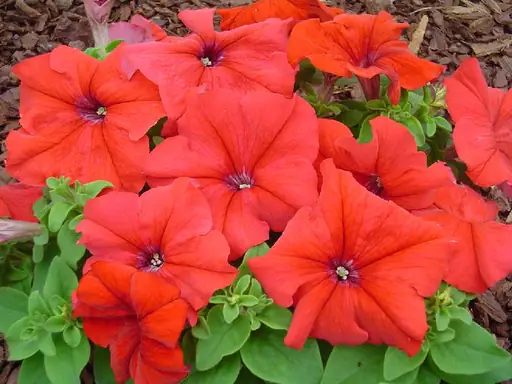
Petunia grandiflora Limbo *GP* Red Flower Seeds
SKU: 63244-1
Limbo is the only natural dwarf non-stretching grandiflora Petunia on the market. This unique petunia series has proven to be of great value to growers, retailers and consumers. Plant growth regulators are not necessary. This made growers understand how, using Limbo petunia would enable them to.
Ask for a tailored quote
Pricing, pack sizes and availability are confirmed in your personal quotation. Sending an enquiry does not place a paid order.
Ask about suitability, sowing and growing requirements.
Confirm delivery options and required documents in your quote.
About this variety
Limbo is the only natural dwarf non-stretching grandiflora Petunia on the market. This unique petunia series has proven to be of great value to growers, retailers and consumers. Plant growth regulators are not necessary. This made growers understand how, using Limbo petunia would enable them to take a step forward in environmentally conscious growing. Its compact and non-stretching plant habit shows a superb shelf life during the shipping and sales period. In the garden Limbo will not get leggy. On the contrary, it will develop into a nicely mound shaped and well-branched plant, covered in huge flowers. Another advantage of Limbo is that it quickly recovers from rain damage and flowers continuously throughout the season. Limbo Violet received the Fleuroselect quality award.
Petunia grandiflora F1 Limbo, natural dwarf
Family: Solanaceae
Used: Outdoor containers, pot and pack, suitable for borders and beds.
Plant type: Annual
Height in pot: 10-15 cm (4-6 in.)
Garden height: 15-20 cm (5-8 in.)
Seed count: 8,000-11,000 seeds/gram (255,000-300,000 seeds/oz) Seed count varies by variety and seed lot
Germination:
pH 5.9 to 6.2
Media EC 0.5-0.75
Stage 1: radicle emergence
Radicle emergence will occur in 3-4 days.
Moisture: keep media wet but not completely saturated to prevent lack of oxygen.
Covering is not necessary. Light: Petunia will germinate better in light versus in the dark.
Temperature: 22-25ºC (72-77ºF )
Stage 2: expanding stem and cotyledons
Moisture: keep media moist but not wet to allow roots to penetrate.
EC. 1.0-1.25
Temperature: 18-20ºC (65-68ºF)
To induce early flowering a day of at least 14 hrs at
3500 lux (350 foot candles) is needed.
Stage 3: development of first true leaves
Moisture: reduce moisture levels for compact sturdy growth. Allow media to dry in between watering. Temperature: 18-20ºC (65-68ºF) To reduce stretching do not use ammonium-based fertilizers but replace with calcium-based fertilizers.
EC. 1.25-1.75
Supplemental lighting up to an 16-18 days will induce early flowering.
Stage 4: finishing/holding stage
Moisture: Keep media relatively dry to prevent stretching.
Temperature: 15-18ºC (60-65ºF) Temperatures below
15ºC (60ºF) will delay flower initiation. Fertilizing and EC: see stage
Growing on:
Low boron levels may cause tip abortion and blindness. Use of calcium-based fertilizers will prevent calcium deficiency
pH: keep pH above 5.7 and below 6.4 to prevent iron deficiency.
Moisture: Allow media to dry and plants slightly to wilt between watering. Best result with growth regulators is after application of watering when foliage is dry.
Light: Most Petunias need long days (> 14 hrs ) to pro- mote early flowering. In low light areas supplemental lighting of 4,000-6,500 lux (400-650 foot candles) is advisable.
Growth regulators:
Petunia Limbo is naturally dwarf and does not need growth regulators to provide a salable plant. However, PGRs can be applied to provide extra compact plants. The plants responds to Daminozide (Dazide, B-Nine 85) at 2-3 g/litre. Stop before flower buds develop.
Pests:
Aphids
Control: common insecticides can be used, check for labelled products.
Diseases:
Pythium, Phytophthora – Damping off. Good hygiene is essential. Botrytis and Powdery mildew can also be a problem. Good hygiene is essential.
Scheduling:
Sowing Potting Flowering
wk 6 wk 10 wk 17
wk 10 wk 14 wk 19/20
“Information copied from the breeder.
will not accept any liability for failure and/or damage as a consequence of incorrect and/or inexpert cultivation by or on behalf of the Buyer.”
Questions & discussion