
 精选
此页面以其原始语言显示,暂无翻译版本。
Seedsun 精选
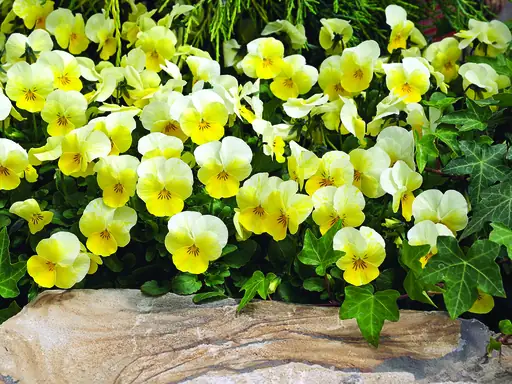
Viola cornuta Penny Primrose Bicolor Flower Seeds
SKU: 86758-1
15 cm, F-1 hybrid. Richflowering, Uniform. Good germination of the seedsFLOWERING Time Frame when plants are receptive to flower initiation: Days 16 – 24; 2 – 3 sets of true leaves. Flowering Type: ‘Penny’ is a minor Facultative Long Day Plant – long days enhance flowering. Specific Flowering.
索取定制报价
价格、包装规格和供货情况将在您的专属报价单中确认。发送询价并不代表您已下单付款。
询问其适宜性、播种和生长要求。
请在报价单中确认送货方式和所需文件。
品种介绍
15 cm, F-1 hybrid. Richflowering, Uniform. Good germination of the seeds
FLOWERING
Time Frame when plants are receptive to flower initiation: Days 16 – 24; 2
– 3 sets of true leaves.
Flowering Type: ‘Penny’ is a minor Facultative Long Day Plant – long days
enhance flowering.
Specific Flowering Mechanism: Daylength and irradiance triggers flowering.
Cool night temperatures enhance flowering.
PLUG CULTURE
Germination – Optimum conditions for seedling development that begins the day
the crop is sown until cotyledon expansion.
Expect radicle emergence in 3 – 4 days.
Cover: Seeds may be covered with a thin layer of coarse vermiculite to maintain
moisture levels.
Media: • pH: 5.5 – 5.8 Lower pH levels will discourage Thielaviopsis outbreaks
and boron deficiencies which may cause tip abortion and stunted
growth.
• EC: <0.75
Light: Light is not necessary for germination. If utilizing a chamber, providing a
light source of 10 – 100 foot candles (100 – 1000 lux) will improve germination
dramatically compared to seed germinated in the dark.
Temperature: 68° – 70°F (20° – 21°C) until radicle emergence. Reduce to
65° – 68°F (18° – 20°C) until cotyledon expansion.
Moisture: Saturated (5) on day 1. On days 2 – 3 reduce moisture to wet (4)
until radicle emergence. On day 7, reduce further to moist (3). Non-uniform
germination may result if media conditions are too dry.
Humidity: 100% until radicle emergence then reduce to 40%.
Dehumidify: Provide horizontal airflow to aid in drying down the media
through evapotranspiration, allowing better penetration of oxygen to the roots.
Fertilizers: Fertigation water should not be greater than an EC of 0.5.
Plug Bulking/Flower Initiation – Optimum conditions during the vegetative
period, beginning at cotyledon expansion, needed for the root to reach the edge of the
plug cell; AND to make the plant receptive to flower initiation.
Media: • pH: 5.5 – 5.8
• EC: <1.0 Violas are sensitive to high salts, avoid EC levels
exceeding 1.5.
Light: Provide 2000 – 3000 foot candles (20,000 – 30,000 lux) maximum. Violas
should not be given night interruption as premature flowering may occur.
Temperature: 65°F (18°C) nights; 65° – 68°F (18° – 20°C) days. Cool nights
will prevent seedling stretch. After several sets of true leaves have appeared,
drop night temperatures to 59°F (15°C) to initiate early flowering.
Average Daily Temperature (ADT): 67°F (19°C)
Moisture: Alternate between moisture levels wet (4) and moist (3). Allow media
to approach level (3) before re-saturating to level (4). Alternating moisture levels
encourages root development. Do not allow seedlings to wilt. Continuously
saturated media will limit oxygen availability, discourages optimal root development
and promotes seedling stretch.
Humidity: 40 – 70%
Dehumidify: Provide horizontal airflow to aid in drying down the media
through evapotranspiration, allowing better penetration of oxygen to the roots.
Fertilizers: Feed established seedlings at 75 ppm Nitrogen with a calcium-based
fertilizer (14-4-14). As seedling matures, increase rate to 100 ppm Nitrogen. An
ammonium concentration >5 ppm will cause seedling stretch. Upward cupping
of leaves may indicate calcium deficiency.
Growth Regulators: If necessary, apply B-Nine (daminozide) at 2500 ppm to
tone the finished plug tray.
GROWING ON
Transplant Ready: 4 – 5 weeks from sow in a ‘288’ tray.
Finish Bulking/Flower Initiation – Optimum conditions during the vegetative
period, beginning at transplant, needed for the root to reach the edge of the container;
AND to make the plant receptive to flower initiation.
Media: • pH: 5.5 – 5.8 At pH levels >6.5,Thielaviopsis may develop as black
lesions on the roots. Symptoms also include yellowing of lower leaves
and die back of the plant. Stressed plants under high temperatures are
most likely to be affected.
• EC: 1.0 Viola roots are sensitive to high salts.
Light: Provide full sun.
Temperature: During the cool season, a night temperature of 59°F (15°C) will
promote early flowering. Temperatures below 59°F (15°C) will promote a
hardier plant, but will increase crop time and delay flowering. Keep days below
68°F (20°C) or as cool as possible during warm weather conditions.
Average Daily Temperature (ADT): 67°F (19°C)
Moisture: Alternate between moisture levels wet (4) and medium (2). Allow
media to approach level (2) before re-saturating to level (4). Saturated media for
extended periods will induce stretching. When growing under warm temperatures
and high light conditions, do not allow the plants to wilt.
Humidity: 40 – 70%
Dehumidify: Provide horizontal airflow to aid in drying down the media
through evapotranspiration, allowing better penetration of oxygen to the roots.
Fertilizers: Feed every 2 – 3 waterings at 100 – 150 ppm Nitrogen with a calciumbased
fertilizer (13-2-13). If desired, an application of ammonium nitrate (17-5-17)
will help expand leaves. During cool weather production, ammonium-based feeds
may encourage root rot problems. High Nitrogen concentrations may promote
stretching.
Nutrition: Malformed, puckered and upward cupped leaves indicate calcium
deficiencies. To prevent this, fertilize with calcium nitrate or add calcium sulfate
to the growing media before transplant. Boron deficiencies can be distinguished
by tip abortion, upper leaf stunting, puckering and thickening of leaves, along with
shortened internodes and/or a gnarled mass of lateral shoots. Violas tend to
be more sensitive to boron deficiencies than pansies. Boron deficiency is
more prevalent during warm weather with frequent watering. pH levels <6.0
will ensure boron is more readily available to the plant. A one-time application
or Solubor will help overcome these problems. NOTE: An overdose of Bonzi
(paclobutrazol) may also produce symptoms similar to boron or calcium
deficiencies.
Growth Regulators: Violas respond to DIF treatments, B-Nine (daminozide)
and A-Rest (ancymidol). NOTE: Malformed leaves and leathery growth may
occur if B-Nine is applied at 5000+ ppm when temperatures exceed 90°F (32°C).
Common Diseases: Alternaria Leaf Spot, Downy Mildew, Thielaviopsis Root
Rot, Cercospora Leaf Spot
Common Pests: Aphids
SCHEDULING
Total crop time: 9 – 10 weeks for Fall market; 11 – 13 weeks for Spring market.
‘288’ Plug crop time: 4 – 5 weeks
Transplant to finish crop time: Timing will vary for production depending on
whether the crop is grown under warm or cool conditions. Crop time for
Spring sales is longer due to cooler temperatures during the winter months in
which it is grown.
Packs: 4 – 5 weeks
4” crop: 5 – 6 weeks
6” crop: 6 – 7 weeks
PRODUCT USE
Packs, pots, containers, mass plantings
GARDEN SPECIFICATIONS
Light: Full sun
USDA Hardiness Zone: 8
AHS Heat Zone: 9 – 1
Garden Height: 4 – 6 inches (10 – 15 cm)
Garden Width: 4 – 6 inches (10 – 15 cm)
“Information copied from the breeder.
will not accept any liability for failure and/or damage as a consequence of incorrect and/or inexpert cultivation by or on behalf of the Buyer.”
问题与讨论