
此页面以其原始语言显示,暂无翻译版本。
Seedsun 精选
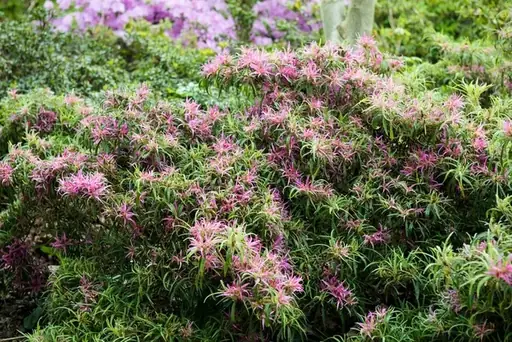
Rhododendron stenopetalum 'Linearifolium'
SKU: RHOD-LINE-01G
A three-hundred-year-old Japanese garden azalea that does not look quite like a rhododendron, does not look quite like an azalea, and does not really look like anything else. The leaves are narrow green ribbons, three to five millimeters wide and a couple of inches long, closer to willow or fine.
索取定制报价
价格、包装规格和供货情况将在您的专属报价单中确认。发送询价并不代表您已下单付款。
询问其适宜性、播种和生长要求。
请在报价单中确认送货方式和所需文件。
品种介绍
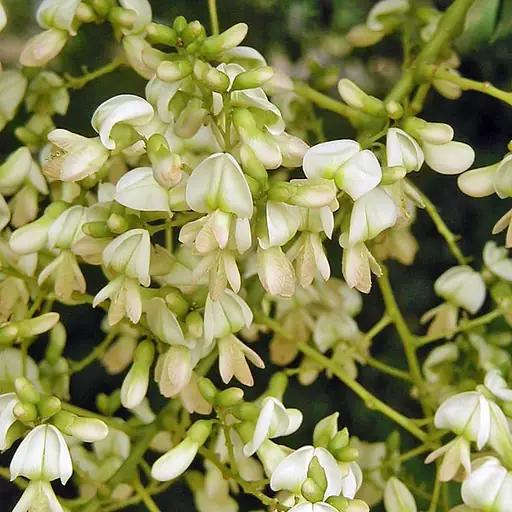
A three-hundred-year-old Japanese garden azalea that does not look quite like a rhododendron, does not look quite like an azalea, and does not really look like anything else. The leaves are narrow green ribbons, three to five millimeters wide and a couple of inches long, closer to willow or fine grass than to the broad rounded foliage of an ordinary tsutsuji. The flowers, opening in late April and May, follow the same grammar: deeply divided into long strap-like petals in lilac-pink to lavender-rose, tangled and knotted at first, then unfurling slowly into a shape that reads, depending on the eye, as a crane fly, a spider, or a piece of decorative garnish. Wabi-sabi made evergreen.
This is one of the great oddities of Japanese horticulture. Azaleas have been bred and refined in Japan since at least the Kamakura period of the twelfth and thirteenth centuries, and selected in earnest through the Edo era; Japan's first book devoted to azaleas, Kinshu Makura, or A Brocade Pillow, appeared in 1692 and codified hundreds of named kinds. 'Linearifolium' is a survivor of that old tradition, a sport chosen and propagated entirely by gardeners, never found in the wild, and alive today only because someone, centuries ago, judged this strange version worth keeping. The Japanese name Seigai Tsutsuji, blue-sea azalea, catches the rippling effect the fine foliage makes in a mass.
The plant has been shuffled through three Latin names over the years, first Rhododendron linearifolium, then R. macrosepalum 'Linearifolium', and now, correctly, R. stenopetalum 'Linearifolium', though the shrub still circulates in the trade under all three. Growth is slow, eventually reaching three or four feet, with a soft, slightly tousled shape that takes kindly to pruning into something more architectural or can be left loose for a quieter effect. The leaves hold through mild winters, often taking on wine-red tones in the cold months before returning to mid-green in spring.
This is not a plant for filling space. This is a plant for the spot where a visitor should slow down and look closely: the corner of a courtyard, a Japanese-style bed, the foot of a stone lantern, beside a bench or a teahouse, anywhere proximity rewards attention. The fine, almost pine-needle texture reads beautifully against the broad leaves of camellias, hostas, or a Japanese maple, and a single specimen carries more interest than a whole bed of ordinary shrubs. Give part shade, acidic, humus-rich, well-drained soil, and shelter from hot afternoon sun that can scorch the narrow leaves.
A fine next step for the gardener who already grows a couple of the broad-leaved azaleas and is ready to move beyond them, and a plant seldom offered, since cuttings root slowly and grudgingly even for skilled propagators. Photos courtesy of Joanna Kossak.
您可能也感兴趣
问题与讨论