
How to Make Your Christmas Cactus Bloom
Tropical Christmas cactus is an easy-care houseplant with blossoms in shades of pink, red, white, and yellow that open during the fall to winter holiday season. The name is a catch-all term that includes a number of Schlumbergera species and hybrids, including S. russelliana, S. bridgesii, and.
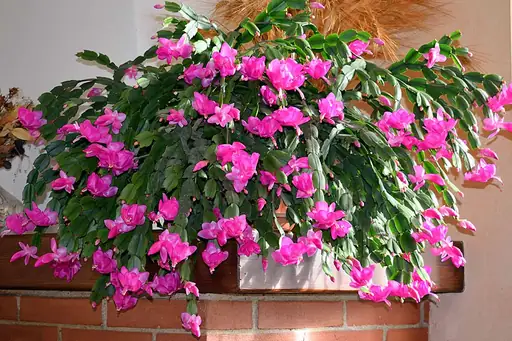
Tropical Christmas cactus is an easy-care houseplant with blossoms in shades of pink, red, white, and yellow that open during the fall to winter holiday season.
The name is a catch-all term that includes a number of Schlumbergera species and hybrids, including S. russelliana, S. bridgesii, and Schlumbergera x buckleyi, as well as S. truncata, the Thanksgiving cactus, which blooms approximately one month before the Christmas variety.
These plants are South American epiphytes that cling to rainforest trees or rocks, drawing sustenance from rainfall and the nutrients in their immediate environment.
Instead of true leaves, this plant has flattened segments called phylloclades, or cladodes, that are fleshy and, unlike many cacti, have no thorns.
On Christmas varieties, the margins are rounded. Thanksgiving types have serrated edges.
Blooms appear at the end of the stems, on the last segment.
In our guide to growing Christmas cactus, we discuss cultivation indoors in bright indirect light and organically-rich, well-draining potting medium.
This article will cover how to coax plants to produce an abundance of flowers in time for the holidays. If these steps are missed, your plants may fail to bloom
Here’s the line-up:
What You’ll Learn
Dormancy Is the Key
Suspend Nutrition
Limit Moisture
Withhold Light
Decrease Temperature
Let’s get started!
Dormancy Is the Key
For plants to set buds, they must experience a period of winter dormancy like they would in their native tropical rainforests.
Known as “short day” plants, it’s the period of shorter days and cooler weather that halts foliar growth and jump starts the flowering process.
How can we replicate the appropriate conditions at home?
To trigger the natural inclination to bloom, four factors must be manipulated: nourishment, moisture, light, and temperature.
By making adjustments to these four aspects of plant care, we can stimulate dormancy.
You’ll need to start preparing your plant for flowering six to eight weeks before Christmas.
Here’s how to do it:
Suspend Nutrition
If you have been fertilizing your plant during the growing season, stop any fertilizer applications.
Withholding additional nutrition is the first step in the gradual shift from foliar to reproductive growth, or flowering.
Limit Moisture
Instead of a thorough soaking every few weeks, during the resting period, water only when the top inch of the potting medium feels dry to the touch, and then only enough to moisten it.
Do not allow the soil to dry out completely.
Need more assistance? Check out our guide on choosing the best potting medium for Christmas cacti.
Withhold Light
To mimic the shorter days of winter, you’ll need to keep the plant in total darkness for 14 to 16 hours each night.
During the day, the plant should be exposed to bright indirect light, but at nighttime it requires total darkness – even exposure to artificial light can stop it from flowering.
You can place your plant in a seldom used room with the shade pulled down, or place a bag or inverted box over the entire plant at night.
Alternatively, you can move your plant in and out of a closet every day, but this could cause some unnecessary stress, as Christmas cacti don’t like to be moved.
Decrease Temperature
And finally, the plant requires a cool location where the temperature is between 50 and 55°F.
A chilly coat closet for nighttime and a north-facing window sill during the day work just fine.
Consistently cool temperatures, the appropriate amount of darkness, minimal water, and no supplemental nutrition trigger dormancy, the key ingredient in the flowering formula.
Start a Holiday Tradition
When buds appear, it’s time to return the plant to its usual placement in a temperate room with indirect sunlight, so they can unfurl to reveal their exquisite blossoms.
For a second bloom in spring, you can induce dormancy using the same process six weeks before Easter. However, there are likely to be fewer flowers.
If you do want reliable flowering at Easter, an alternative is a different species of Schlumbergera. S. gaertneri, formerly Hatiora gaertneri, is the Easter cactus.
It has star-shaped blossoms and slightly scalloped margins. The same dormancy process applies, and should be started about six weeks before Easter for spring flowers.
Include Schlumbergera cacti in your holiday decor.
They’re easy to grow, live long enough to become family heirlooms, and are easy to propagate via cuttings. And when the buds burst into tropical blossoms, they never cease to delight.
Does your Christmas cactus bloom every year? Do you have any tips for helping it along? Let us know in the comments section below!
For more information about Christmas cactus, you’ll want to read these articles next:
- Why Do I See Hair-Like Roots on My Christmas Cactus?
- Why Is My Christmas Cactus Dropping Leaves?
- How to Identify and Control 7 Common Christmas Cactus Pests
- Why Is My Christmas Cactus Turning Purple?
- Facebook286
- X
问题与讨论