
 선택된
이 페이지는 원문으로 표시됩니다. 번역본은 아직 제공되지 않았습니다.
시드선 셀렉션
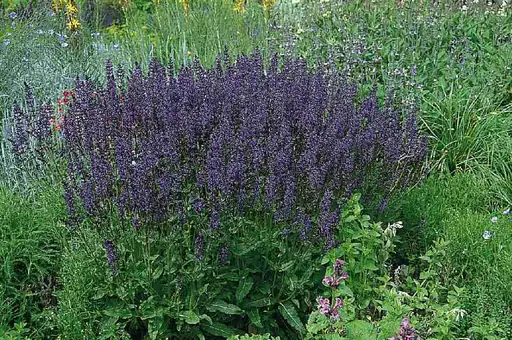
Salvia x superba Dwarf Blue Queen Flower Seeds
SKU: 74900-1
Deep purple flower, compact dense habit Excellent colour effect, scentedSalvia x superba QUEEN Dwarf Blue Perennial Salvia, Hybrid Sage Culture guide Uses: Plant for bedding, pot and container plant for patio, beautiful plants that attract bees, cut flower production Exposure: Sun Garden height:.
맞춤 견적을 요청하세요
가격, 포장 크기 및 재고 여부는 개별 견적서에서 확인하실 수 있습니다. 문의를 보내는 것만으로는 유료 주문이 접수되지 않습니다.
재배 적합성, 파종 및 재배 요건에 대해 문의하십시오.
견적서에서 배송 옵션과 필요 서류를 확인하세요.
이 품종에 대하여
Deep purple flower, compact dense habit
Excellent colour effect, scented
Salvia x superba QUEEN Dwarf Blue
Perennial Salvia, Hybrid Sage
Culture guide
Uses:
Plant for bedding, pot and container plant for patio, beautiful plants that attract bees, cut flower production
Exposure:
Sun
Garden height:
16″ / 40 cm
Crop time:
13-15 weeks
Sow time:
January-March for flowering in pots from June onwards; August-October for flowering in pots the following year
Sowing method:
1-3 seeds per plug
Germination:
Germinates in 14-20 days at 65-77 °F (18-25 °C). Light is required for germination.
Growing On:
Transplant plugs after 7 weeks. Grow on at 60-65°F (15-18 °C) in a well-drained, alkaline medium. Vernalization is not required for flower initiation.
Media:
Use a well-drained, growing perennial substrate with 0-15 % clay, 0-15 % parts (e. g. bark, wood fibres, sand), 1-2 kg/m³ complete balanced fertilizer, 0-3 kg/m³ slow release fertilizer (3-6 months), iron-chelate, micronutrients, pH: 6.0-7.5. Field: loamy sandy to sandy humus soils with good drainage. Standard fertilization: 50-80 g/m² of a slow release fertilizer.
Temperature:
Grow at 10-18 °C or outdoors. In winter indoors frost free at 3-5 °C or outdoors. Outdoors fleece cover needed. In spring the plants start to grow for 8-10 weeks at 15-18 °C and long day. Cold temperatures of 8-10 °C will increase the cultivation time by 3-4 weeks. If cultivated at low light levels, the temperature should be cool for
good stem quality. A chilling period (vernalization) is not required.
Fertilization:
Moderate-high fertilization levels are required. Fertilize the crop weekly with 150-200 ppm nitrogen (at 2 kg/m³ slow release fertilizer in substrate), using a complete balanced fertilizer. Avoid high ammonium and high nitrogen levels. High nitrogen levels are the cause that the shoots are stretched and the plants fall apart. Don’t fertilize after mid September. In spring fertilize 150-200 ppm nitrogen of a potassium balanced fertilizer (N: K2O-ratio: 1:1,5). The roots are sensitive to high salt levels in substrates. Avoid high fertilizer concentrations, it is advisable to fertilize several times with low concentrations weekly. Field: If necessary according to analysis, improve the soil with 50-80 g/m² of a slow release fertilizer, applied in several portions.
“Information copied from the breeder.
will not accept any liability for failure and/or damage as a consequence of incorrect and/or inexpert cultivation by or on behalf of the Buyer.”
질문 및 토론