
How to Care for Milkweed Plants in Winter
Luckily, there isn’t all that much that you need to do – though there are a few tips and tricks that you should follow to ensure the perennial growth of healthy plants with an abundance of blooms. If you’re just getting started, you can find complete cultivation instructions in our growing guide..
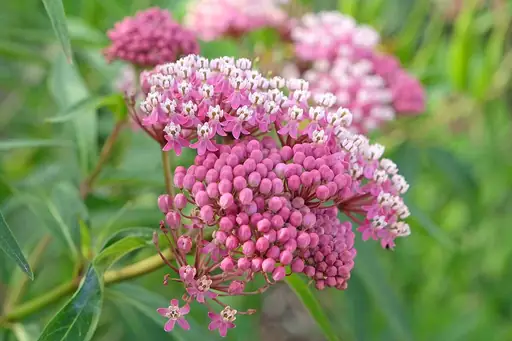
Luckily, there isn’t all that much that you need to do – though there are a few tips and tricks that you should follow to ensure the perennial growth of healthy plants with an abundance of blooms.
If you’re just getting started, you can find complete cultivation instructions in our growing guide.
Read on to learn how to care for Asclepias plants during the winter, so they can return robust as ever the following spring.
What You’ll Learn
Winter Care
Prune in Fall or Early Spring
Save and Spread Seeds
Winter Care
Milkweed is an herbaceous perennial, and the Asclepias genus includes more than 100 species native to the US and Canada.
These can be identified by their characteristic milky white sap, which can be found within the stems and leaves.
Plants in this genus flower during the summer, set seed in the fall, and die back in winter.
With proper care, they’ll be ready to sprout again the following spring from an underground network of creeping roots. Milkweed also spreads easily from seed.
There are species that have adapted to grow in almost all climates. If you are growing a variety that is native to your climate, winter care requirements will be minimal.
If you live in a cold climate or you are growing a species that isn’t quite hardy to your zone, you can add a few inches of wood chips or straw mulch to help protect the root system over the winter.
You can find our list of recommended milkweed varieties here.
Prune in Fall or Early Spring
You can cut plants back in the fall or wait until the spring.
If you hold off until early spring, this allows birds and other small animals to use the fluff surrounding the seeds and the fibers from the stalks to build nests.
To prune, just use a pair of clean pruners to cut each dead stem to the ground. These can be added to the compost pile.
Whenever you choose to prune, just make sure to wait until the seed pods have matured and dispersed their seeds first.
Save and Spread Seeds
Milkweed plants are the main food source and habitat for monarch caterpillars, an important and threatened native pollinator – so the more we can spread it around, the better!
Seeds from some species require cold stratification, so if you let the seeds disperse they will sit dormant in the garden until spring.
Warm weather and tropical species including A. curassavica do not require cold stratification.
You can also collect them and spread them out yourself wherever you want them. Do this in late fall, after the first frost but before a hard freeze.
Butterflies Galore
Caring for milkweed in winter is a piece of cake, and the rewards are so satisfying!
With barely any effort required over the winter, you can watch your garden fill up with a huge patch year after year.
First will come the caterpillars, then enchanting glasslike cocoons will hang down from the branches, and finally the garden will be filled with butterflies!
What are your tips for overwintering milkweed? Share your thoughts in the comments below!
And for more tips on preparing your flowers for winter, check out these guides next:
- How to Prepare Your Delphinium Plants for Winter
- How to Care for Peony Plants in Winter
- How to Prepare Coreopsis for Winter
- Facebook84
- X


질문 및 토론