Cette page est affichée dans sa langue d'origine. La traduction n'est pas encore disponible.
La sélection Seedsun
Pumpkin Dill's Atlantic Giant Seed for Garden Planting
UGS: 00689FLCTRT-10SD
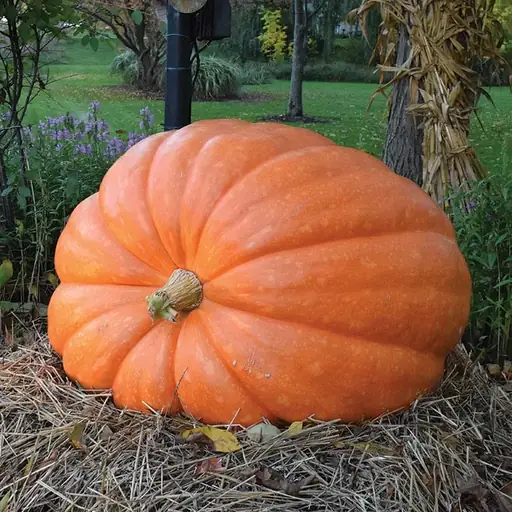
For giant pumpkin contests. Add intrigue to your pick-your-own patch or farm market with your own giant pumpkins! This variety is easy to grow but requires plenty of space, as vines spread 25' or more. Fruit often weigh 200 to 300 lbs. with average care, and the world record is over 2000 lbs.!.
Demandez un devis personnalisé
Les prix, les conditionnements et la disponibilité sont confirmés dans votre devis personnalisé. L'envoi d'une demande de renseignements ne constitue pas une commande.
Renseignez-vous sur l'adéquation, les conditions de semis et de culture.
Veuillez confirmer les options de livraison et les documents requis dans votre devis.
À propos de cette variété
For giant pumpkin contests. Add intrigue to your pick-your-own patch or farm
market with your own giant pumpkins! This variety is easy to grow but requires plenty of space, as vines spread 25' or
more. Fruit often weigh 200 to 300 lbs. with average care, and the world record is over 2000 lbs.! These giant, deep-round,
yellow-orange pumpkins add giant fun to fall markets! Cultural information is included on each package.
Average Weight: 200-300+ pounds
Growing Tips
Growing the giant pumpkin of your dreams is easy with Atlantic Giant Pumpkin seeds from . To ensure your Atlantic Giant Pumpkin seeds grow as large as possible, start the planting process indoors at least four weeks before the last spring frost. After the last frost, transplant Dill's Atlantic Giant Pumpkin seeds outside when the soil temperature reaches 70 degrees Fahrenheit or over. Ensure there are at least 36 to 48 inches of space between each seedling.
Dill's Atlantic Giant seeds require high amounts of nitrogen to help them reach their record-breaking sizes. Plant your Giant Pumpkin seeds in fertile soil or enhance your soil with compost or manure. These pumpkin seeds require high amounts of water and should receive at least one inch of water every week.
Show More
Show Less
 Choisi

Questions et discussion